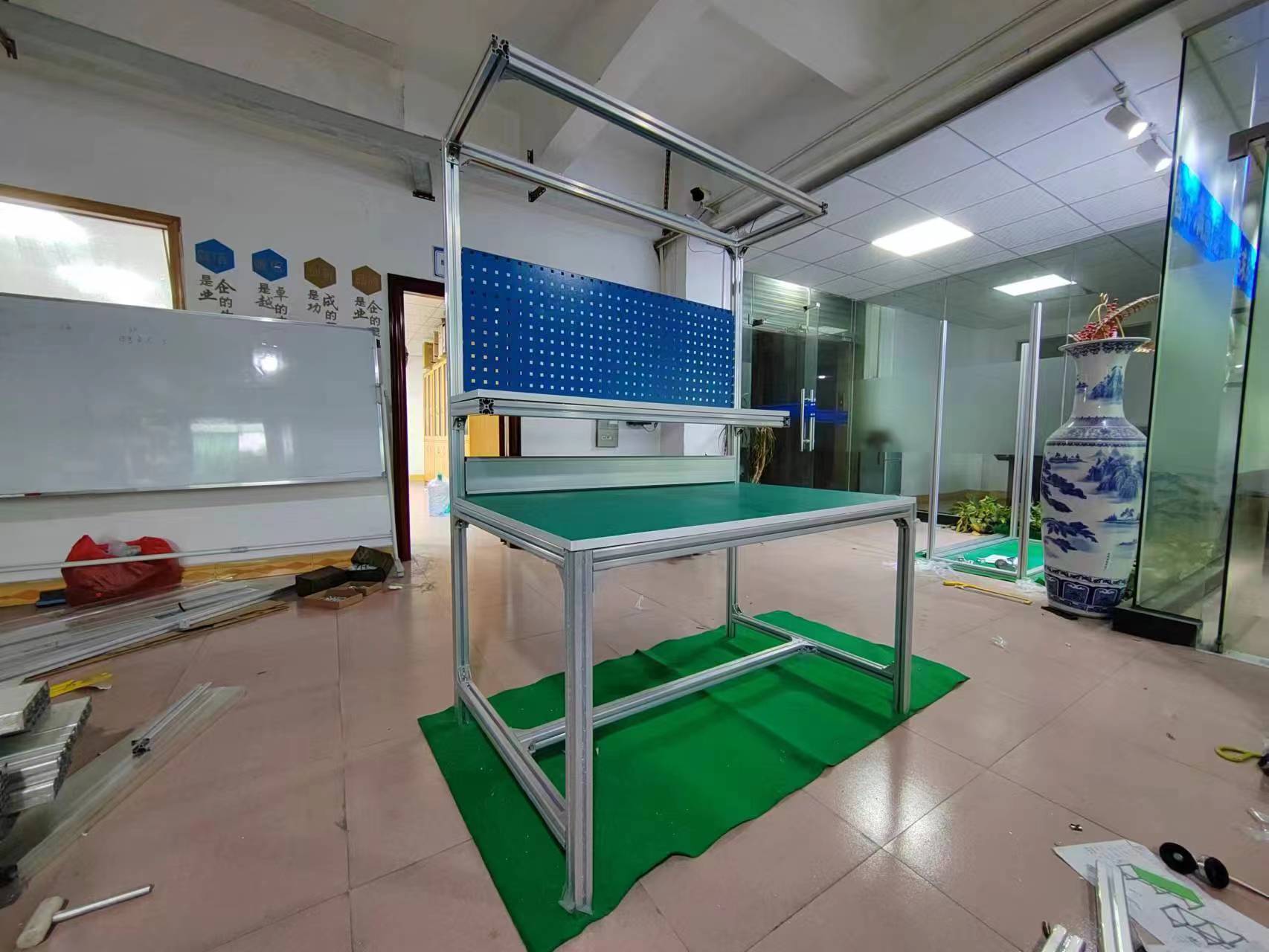
What to Know Before You Specify This Unit
A aluminum profile workstation with light is the right answer when the workstation will not move. Aluminium profile holds tighter tolerances and carries more than pipe-and-joint construction, which matters for inspection benches, test stations and anything with a fixture bolted to it. What you give up is the ability to reshape it cheaply.
Points that decide whether it works on your floor
- Profile size decides rigidity — 40x40 suits light assembly, 40x80 is the sensible step up for anything with a shelf load or a fixture mounted on top.
- Check the worktop separately — most of what looks like frame trouble is actually worktop trouble.
- Ask what the frame can be extended with later. T-slot profile accepts add-ons from any standard supplier, which keeps future purchases honest.
- Height is an ergonomic decision, not a catalogue default. Elbow height plus the task: fine inspection wants the surface higher, heavy assembly wants it lower.
- T-slot means accessories reposition without drilling. Ask which slot standard it uses before buying third-party brackets that will not fit.
- Specify the worktop separately from the frame. The frame rarely fails; the worktop takes the damage.
Frequently Asked Questions
What size profile do I need?
40x40 covers light assembly. Move to 40x80 where there are shelf loads, overhead structures or fixtures bolted to the top. Sizing up at the frame stage costs far less than reinforcement after commissioning.
Can I mount my existing fixtures?
Usually, if the slot standard matches. Send the slot width and fixture hole pattern and compatibility can be confirmed before you order.
Why choose aluminium profile over pipe and joint?
Rigidity and precision. Profile suits inspection, testing and fixture-heavy work where the frame must not shift. Pipe and joint suits anything likely to be rearranged. If the station will never move, profile is usually the better frame.