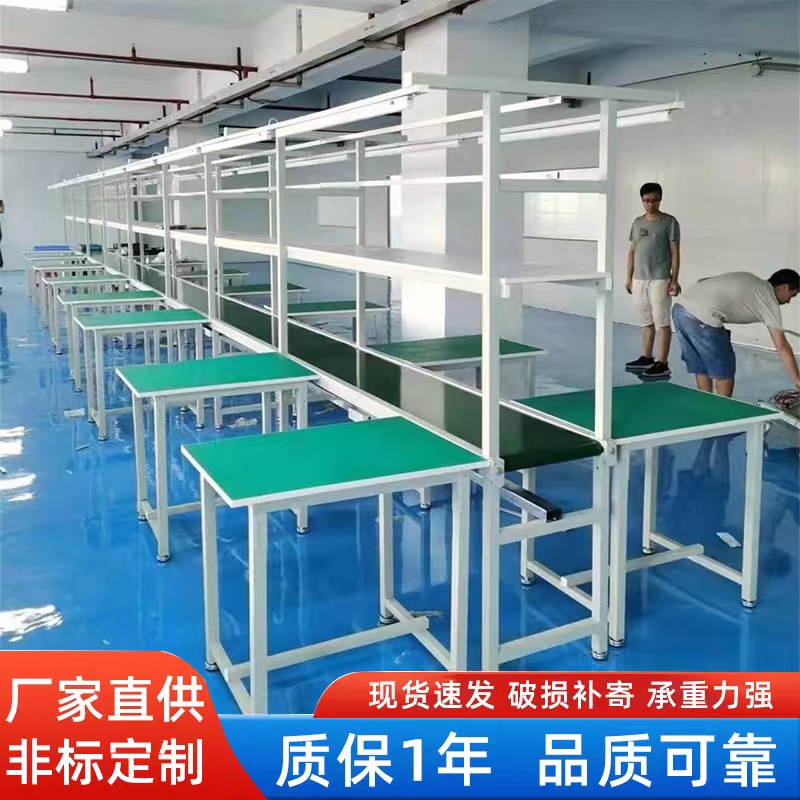
What to Know Before You Specify This Unit
A belt conveyor inspection bench is built around one question most buyers never write down: how many seconds does one unit spend at one station? Everything on this bench — belt width, belt speed, frame length and drive power — follows from takt time, not from the size of the room. Start there and the rest of the specification almost writes itself.
Points that decide whether it works on your floor
- Belt speed should be set so that one operator finishes one unit before the next arrives. Faster than that and you have built a queue with a motor on it.
- Plan the reject path before installation. Every line needs somewhere for a suspect unit to go other than the floor.
- Ask whether the belt surface is anti-static. For electronics assembly a standard PVC belt generates charge and quietly defeats every ESD measure on the bench.
- Frame material decides whether this line can be moved next year. Bolted frames can be dismantled and reassembled; welded ones cannot.
- Frame length is station pitch multiplied by station count, plus room at each end for in-feed and out-feed. Buyers who order by room length usually end up short at one end.
- Worktop edges and station pitch should match how operators actually reach. A line that forces a twist in the torso produces the same complaints as a badly set chair.
Frequently Asked Questions
What information do I need before requesting a quote for a belt conveyor inspection bench?
Station count and station pitch, belt width and belt type including whether you need anti-static, load per station in kilograms, frame material preference, and destination port. A rough layout sketch shortens the exchange considerably.
Can the belt speed be adjusted after installation?
On a variable speed drive, yes, and you should — belt speed is the first thing that needs tuning once real takt time differs from the estimate. Specify the drive at order stage; adding it later costs several times what it would have.
How does the workbench integrate with existing production lines?
Frame height and belt height need to match the adjacent conveyor, and the drive unit needs clearance and power at one end. Send the interface dimensions and the frame can be built to meet them.