What to Know Before You Order
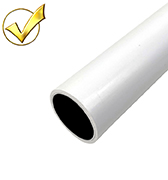
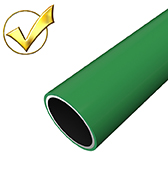
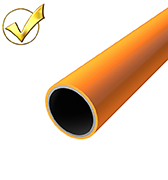
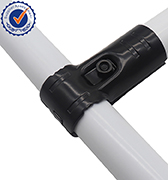
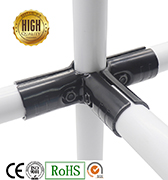
YSL-4000B Aluminum Lean Pipe System is the structural element of a modular tube system — 28 mm outside diameter, coated steel core, cut and joined on site with hand tools. What it is asked to do is carry load across a span, and that is where most specification mistakes are made.
Allowable load falls sharply with span: our 28 mm lean pipe load rating tables give the figures for each wall thickness and span, with the deflection limit and safety factor stated so the arithmetic can be checked.
Points that decide whether it works
- Cut tube square and deburr before assembly. An out-of-square cut loads the joint unevenly and shows up later as a frame that will not sit flat.
- Halving the unsupported span roughly triples what a shelf carries, using one extra length of tube and two joints. It is almost always cheaper than upgrading to thicker wall tube for the same result.
- Published load figures assume the weight is spread across the whole shelf. A fixture or a gearbox sitting in one spot bends the panel several times harder at the same total weight.
- For electronics work, specify dissipative coating with surface resistivity in the 10^6 to 10^9 ohm range, and confirm the joints, casters and worktop belong to the same grounded path.
- The coating is a wear part. PE and ABS both scuff, and neither survives being dragged across concrete. Cut ends should be capped or deburred so the steel core does not rust from the inside.
Frequently Asked Questions
Can you cut to length?
Yes, and cut-to-length delivery removes the squareness risk that comes with site cutting. If you cut on site, use a fine-tooth blade and deburr both ends before assembly.
Is the coating available in ESD?
Yes, with surface resistivity in the 10^6 to 10^9 ohm range. Specify it at enquiry stage; retrofitting means replacing tube rather than adding an accessory.
Which wall thickness should I choose?
Choose by span first, then by load. If the unsupported distance is over a metre, adding a support usually beats buying thicker tube — the cost is lower and the stiffness gain is larger.